
Gladwin Projected vs Actual Release
A projected date is a calculation or decision point. An actual release date records a completed physical exit from a named custodian. Michigan’s Offender Tracking Information System, or OTIS, uses “Earliest Release Date” and “Maximum Discharge.” Earliest Release Date, often shortened to ERD, generally marks when Michigan Parole Board jurisdiction begins. The Board may act at or after that point, deny parole, defer a decision, or change an earlier grant. Maximum Discharge is the controlling maximum expiration within MDOC’s record. Neither field should be relabeled as a guaranteed pickup day.
A past “Date Paroled” is much stronger evidence of departure from prison. It shows the physical transition from prison or the date parole status was conferred in another nonsecure setting. Parole is supervised release, so it does not mean the sentence ended. A “Discharged” status addresses the later end of MDOC authority. These distinctions matter in Gladwin County because a local court case can lead to county jail, state prison, probation, or another outcome, and each path produces a different date record.
Scheduled versus actual: ERD marks parole jurisdiction, Date Paroled records a past transition, and discharge marks the end of MDOC supervision.
Find a Gladwin Projected Release
Identify the custodian before opening a search. OTIS covers prisoners, parolees, probationers under MDOC, and people discharged within its public retention window. It does not cover someone serving only a Gladwin County Jail term, a person not yet sentenced to MDOC, or a federal prisoner. A county jail exit should be checked through the Sheriff and court. A state prison date belongs in OTIS. That first choice prevents a local transfer to prison from being treated as a release.
- Determine whether the person is in Gladwin County Jail, MDOC, or another system.
- For MDOC, open OTIS and use the six-digit MDOC number when known.
- Otherwise search the name and use the available identity filters with care.
- Set Offender Status to ALL so a discharged record is not hidden.
- Open the blue offender number and confirm the identity.
- Read ERD, Maximum Discharge, parole information, and every sentence together.
- For county jail, obtain the judgment, credited days, jail computation, and actual release record.
The OTIS search form shows why status selection matters. The manifest image below captures its search screen, including the status field used to include released or discharged records.
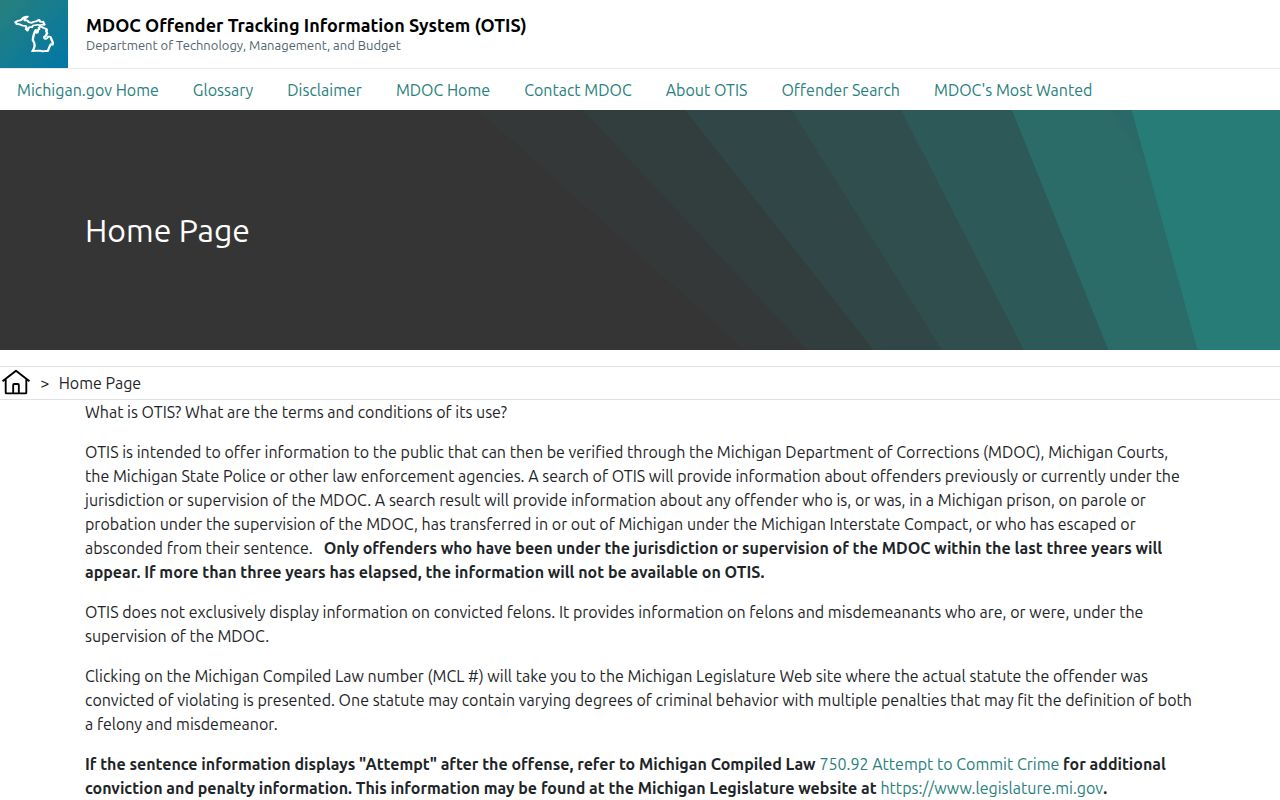
Use the form to narrow an identity, then open the profile. A list result alone does not explain whether the person reached ERD, was paroled, transferred, or discharged.
If OTIS returns nothing, check the scope before drawing a conclusion. A person who served only a Gladwin County Jail term will not appear merely because the case was criminal. A state record may also fall outside OTIS’s normal three-year display after discharge. Repeat the search with Status ALL and the MDOC number, then use the sentencing court, MDOC Records Retention, or a precise MDOC FOIA request when the record is older. The absence of a profile is not a release date and does not establish that the prior sentence vanished.
Read Gladwin OTIS Release Fields
OTIS places several dates on one state record because Michigan corrections tracks different points in a sentence. Read the labels literally. If several sentences appear, concurrent terms run at the same time while consecutive terms run one after another. The controlling date may depend on that structure, the judgment, the offense date, jail credit, and MDOC’s official calculation.
| OTIS field | What it means for release |
|---|---|
| Offender Status | Shows whether MDOC reports the person as a prisoner, parolee, probationer, discharged person, or another listed status. |
| Location | Identifies a prison or supervising office. A prison location change can be a transfer rather than release. |
| Earliest Release Date | Generally opens Parole Board jurisdiction. It is not a release appointment or promise. |
| Maximum Discharge | Shows the controlling maximum expiration within the MDOC record and must be read with current status. |
| Date Paroled | Records the physical transition from prison or the date parole status was conferred in a nonsecure setting. |
| Discharge information | Shows the end of MDOC supervision when the record reports a completed discharge. |
The MDOC frequently asked questions explain ERD, Maximum Discharge, and the public OTIS window. The captured source highlights those definitions.
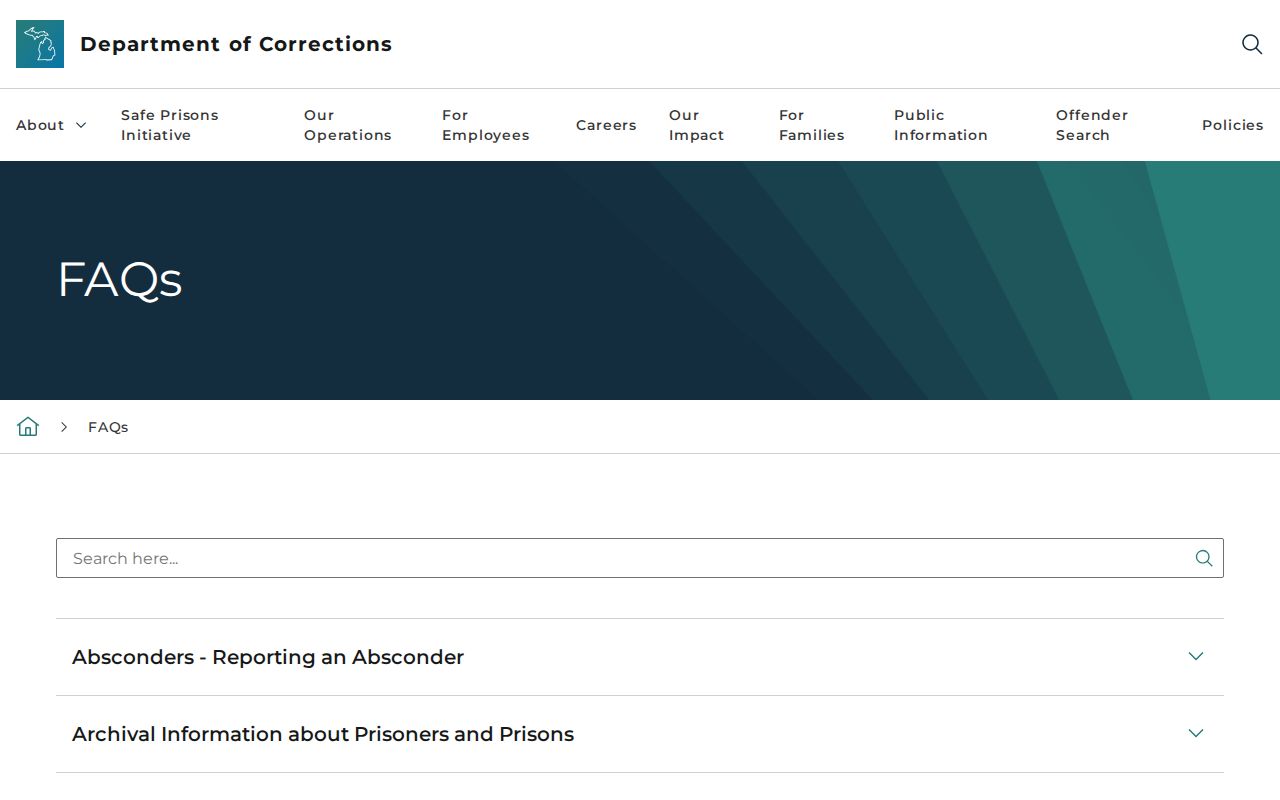
Those definitions support a precise statement such as “OTIS lists ERD as the following date,” not the broader claim that the person will leave prison that day.
Michigan Full Minimum Release Rule
Michigan is not governed by a generic rule that most prisoners serve 85 percent. For covered truth-in-sentencing cohorts, MDOC states that the person must serve the full judicial minimum in prison before parole consideration. The framework applies to listed assaultive crimes committed on or after December 15, 1998, and to other crimes committed on or after December 15, 2000. It eliminated good time, disciplinary credits, and corrections-center placement for those covered groups before the minimum is served. Class I disciplinary time is considered by the Parole Board rather than acting as a routine credit off that minimum.
Older offense-date cohorts can fall under MCL 800.33 good-time or disciplinary-credit provisions. Credits may be forfeited or restored. MCL 800.33(14) also makes a prisoner subject to disciplinary time ineligible for the older credit types. This offense-date split is the reason a simple percentage estimate fails. The judgment, offense date, concurrent or consecutive structure, jail credit, and controlling statute must all be reviewed. An individual sentence should not be recalculated from a web summary.
The official MDOC Truth in Sentencing page is the source for the full-minimum rule and its effective-date cohorts. The manifest image below captures that Michigan-specific framework.
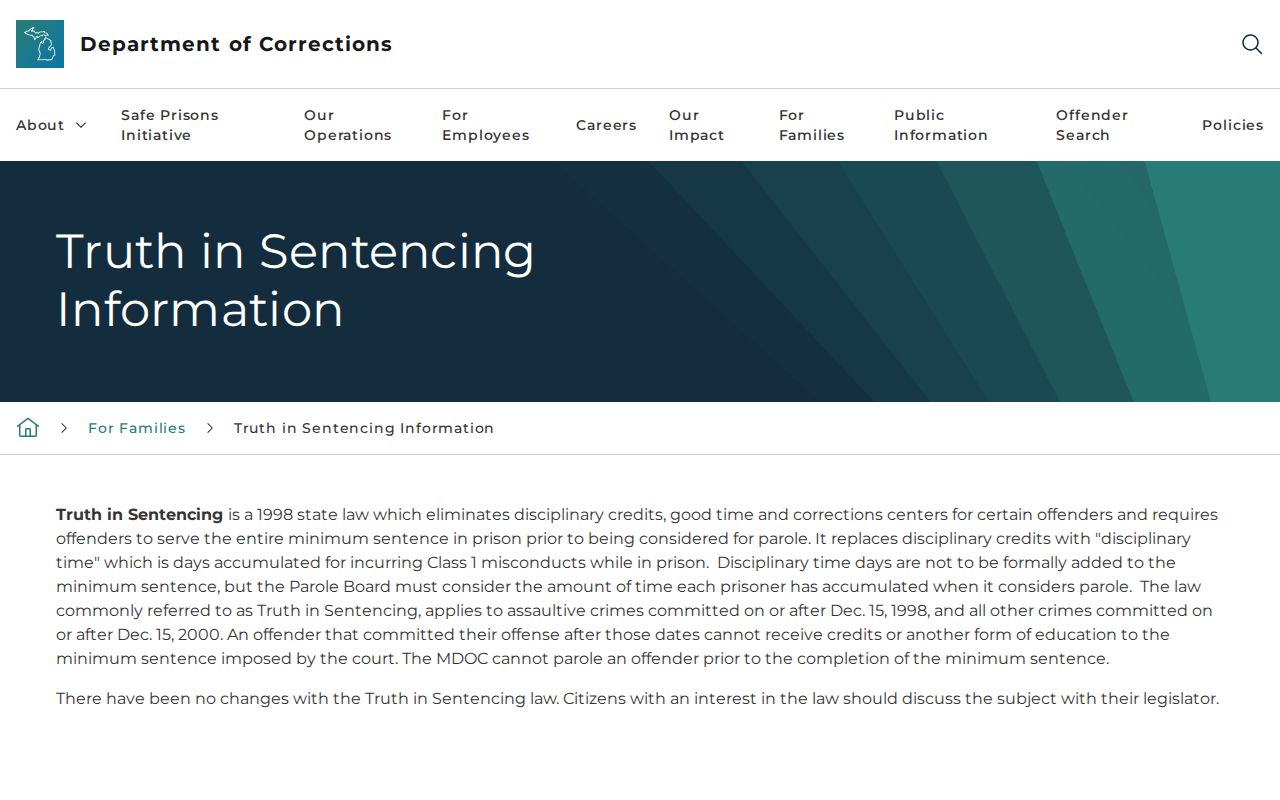
The source confirms why a Gladwin case cannot borrow an 85-percent formula from federal law or another state. Use the governing Michigan cohort and MDOC’s computation.
Gladwin Jail Projected Release Dates
Gladwin County publishes no county good-time policy or online projected-release field. A person held before trial has no fixed sentence-completion date. Bond, dismissal, a court order, disposition, another warrant, or a separate hold can change when the jail may process an exit. Even after a judge authorizes release, the jail’s actual exit occurs after its own checks and processing. A court order and a jail release record therefore answer different parts of the question.
For a county-jail sentence, obtain the signed judgment, credited days, and the jail’s computation. The 80th District Court handles misdemeanors and the early stage of felony cases. A felony proceeds to the 55th Circuit Court after district-court proceedings. Read the right case record, since a person can have more than one matter or hold. MiCOURT supplies a public starting point, while the clerk can provide the judgment when docket shorthand is not enough.
Then contact the Gladwin County Sheriff’s Office. The direct jail number is 989-426-7121. Ask whether the date is a current estimate, a sentence-completion calculation, or an actual exit already recorded. No sourced Gladwin rule promises weekend advancement, holiday release, or release at a set hour. Those details must be checked for the specific booking rather than inferred from another county.
When the jail gives an estimate by phone, note who supplied it and when it was checked, then ask what could still change it. For durable proof after the event, request the actual release or transfer date and time, the reason or code definition, the releasing authority, and the receiving agency if the person moved elsewhere. That last field is vital in Gladwin because the jail can hold people for other jurisdictions. Leaving the county building may begin another custody episode instead of ending custody.
Why Gladwin Release Dates Change
A date can move for lawful and administrative reasons. Some affect eligibility. Others affect the physical exit after a favorable decision. A changed date is not automatically an error. Compare the new field with the court order, sentence structure, parole status, and any hold or destination information.
| Factor | Possible effect |
|---|---|
| Amended judgment or jail credit | A court change or corrected credit can require a new computation. |
| Consecutive sentences | One term may begin after another instead of running at the same time. |
| Older credit rules or misconduct | Applicable credits may be forfeited, restored, or displaced by disciplinary-time rules. |
| Parole decision | The Board may grant, deny, defer, amend, or rescind action before physical release. |
| Release planning and notices | A favorable parole decision can precede the actual exit while required steps are completed. |
| New hold or detainer | Another authority may continue custody even when one sentence permits release. |
| Administrative correction | MDOC or a court may correct data or sentence information through the proper channel. |
MDOC says routine parole consideration generally begins before eligibility, and a positive decision still precedes physical release. The Parole Release Unit documents the decision, parole date, term, conditions, placement, and required notices. Research for Gladwin County notes that MDOC describes at least 28 days between the Board’s release decision and physical release. “Granted” is therefore not the same as “released.” For a past event, Date Paroled is the stronger public marker.
Confirm a Gladwin Release Date
For a future state-prison event, keep the ERD label intact and monitor the OTIS status. The Michigan Parole Board can answer Board-process questions, while the assigned supervision office becomes relevant once parole begins. OTIS’s Location link is the best first check because a person need not be assigned to the Gladwin field office even when the original case was local.
VINELink can add a custody-change notice if the relevant agency and person record are available. Register on the exact match, save the confirmation, and verify any alert with the custodian. The Gladwin VINELink inmate search guide explains that process and the telephone PIN. An alert is not a discharge certificate and may report a transfer rather than community release.
For county jail, request the actual exit time and release or transfer code from the Sheriff. The FOIA email is cosheriff@gladwincounty-mi.gov, and the county publishes a forms packet, policy, public summary, and fee worksheet through its forms hub. Ask for the destination agency when a transfer is possible. Pair that record with the court disposition. The Gladwin released-inmate records path shows how the jail exit, court order, and state record answer separate questions.
For a completed MDOC sentence, look for discharge information or request the formal Discharge Certificate. OTIS usually displays discharged people for three years, so an older no-result does not erase a former sentence. MDOC Records Retention or a focused MDOC FOIA can address older releasable material. In every system, the safest statement names the field, custodian, date checked, and whether the fact is projected, paroled, transferred, actually released, or discharged.